

Stories
Life in the Orange Hall
The Hand and Pen Orange Hall wasn’t just a meeting space, it was the heart of lodge life. Learn more about how the hall was used.
Learn MoreVisit the Hand and Pen Orange Hall, a real-life Orange Lodge from County Monaghan now located in the rural area of the Ulster Folk Museum. You’ll find it marked as number 52 on the museum map.
View MapThis small country hall was used by the Hand and Pen Loyal Orange Lodge (L.O.L.) No. 597 for its monthly meetings and social events. The layout is typical of small country Orange halls of the period.
The townland of Corbeg.
Built in 1884, brought to the Ulster Folk Museum in 1995 and opened in 1998.
Before the First World War the lodge had a steady membership of 60 to 80 members.
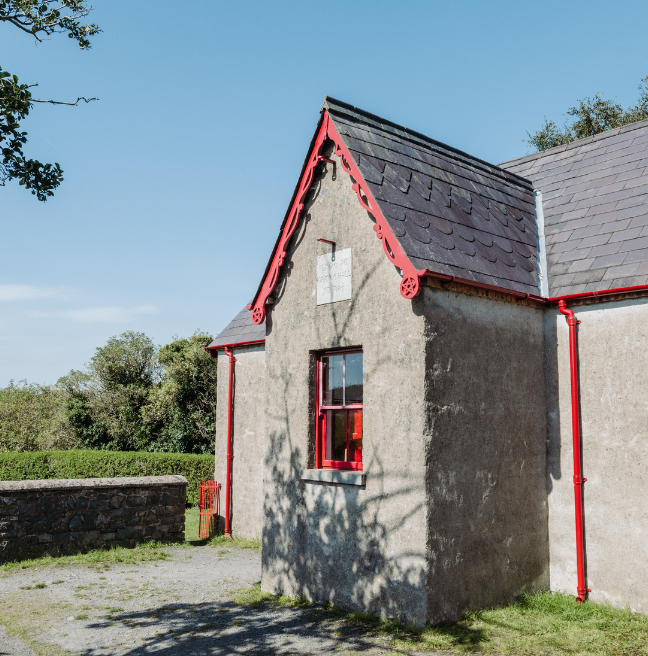
The hall’s exterior showcases several interesting features that reflect its heritage. Decorative bargeboards adorn the eaves and the front gable, incorporating a five-pointed star—a distinctive symbol of the Orange tradition. The scalloped slates on the porch add visual contrast to the more conventional roofing used across the rest of the structure.
Inside, the hall's layout is typical of small country Orange halls from its era. Sometime between 1931 and 1946, the fireplace and platform were repositioned, and an annex was added to the building. However, the museum’s interpretation of the space focuses on its original design, providing visitors with an authentic sense of its historical use and significance.
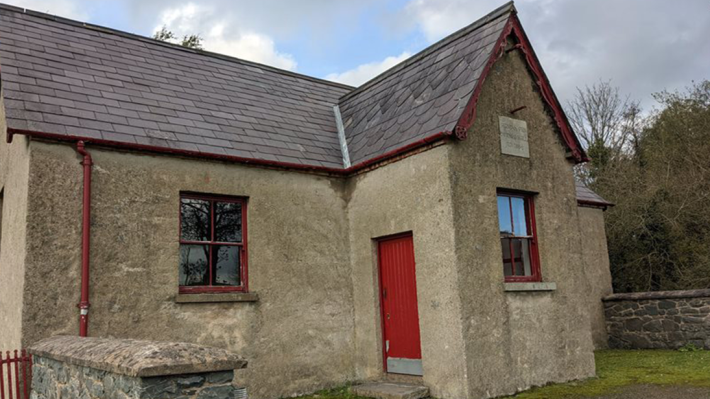
Below are archival images from 1994, that shows the hall prior to its relocation.
The Hand and Pen Orange Hall wasn’t just a meeting space, it was the heart of lodge life. Learn more about how the hall was used.
Learn MoreThe hall takes its distinctive name from the “Hand and Pen” farm, once worked by the Garland family. The land itself was owned by Sir John Leslie, a local landlord who provided the site for the building.
But where did the name come from? It’s believed to have originated from a nearby shop sign showing a hand holding a quill pen - a striking image that stuck in local memory. When the hall was built, the name “Hand and Pen” was carried over, weaving a unique piece of local heritage into its identity.
By the early 1980s, life in the Hand and Pen Orange Hall had quietened. As Protestant families moved away from the area, lodge membership declined, and meetings eventually came to an end.
In 1989, the hall was generously donated to the Ulster Folk Museum, ensuring its stories wouldn’t be lost to time.
A few years later, in 1994, a team from Enterprise Ulster carefully dismantled the building brick by brick, preparing it for its new life in Cultra. Thanks to a £10,000 sponsorship from the Orange Order, the hall was rebuilt and officially reopened in 1998.
The hall was fitted out by Tony Buckley, Curator of Community Life, using authentic furnishings from Orange lodges in Co. Monaghan. Step inside today and you’ll find:
Every detail invites visitors to imagine the voices, debates, and laughter that once filled this space, a place where rituals were followed, community ties were strengthened, and tradition lived on.
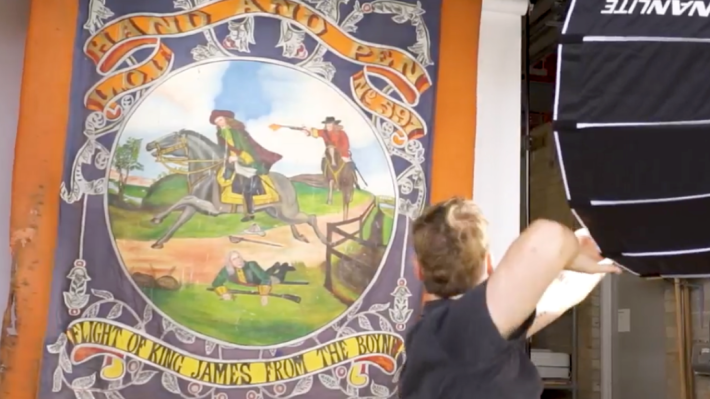
A new replica Orange Hall banner has been installed at Ulster Folk Museum. A reproduction of the original in our collection, this replica allows visitors to engage with the tradition.
Learn more about the replica banner